Jim Corbett National Park is India’s oldest national park and one of its best places to see a wild tiger. But planning a trip here confuses most first-time visitors: 12 different zones, three kinds of safari, a permit system with strict quotas, and a monsoon closure that catches people out. This guide pulls all of it together in one place.
We are Bagh Travels, a safari operator based in Ramnagar — the gateway town to the park — and we have arranged safaris here for over 25 years. Everything below is what we actually tell our guests. Where a section needs more depth, we link to our detailed guide on that topic.
In short
A Jim Corbett safari is an open-vehicle wildlife drive through Jim Corbett National Park in Ramnagar, Uttarakhand. You can book a jeep safari (from INR 7,500), a canter safari (INR 2,500 per person for Dhikala) or an elephant safari across any of the park’s 12 zones, with a Forest Department permit required.
On this page
Quick snapshot
| Location | Ramnagar, Nainital district, Uttarakhand, India |
| Number of zones | 12 |
| Safari types | Jeep, canter (Dhikala), elephant |
| Jeep safari price | From INR 7,500 per jeep |
| Core season | Mid-October to end of June (core zones close in monsoon) |
| Best for tigers | May and June |
| Permit window | 45 days ahead (Indian) / 90 days (foreign nationals) |
| Nearest railhead | Ramnagar |
What is a Jim Corbett safari?
A safari here is a guided drive on fixed forest tracks inside a designated zone, in an open Forest Department–permitted vehicle, accompanied by a licensed naturalist guide. You stay in the vehicle throughout. Each zone has its own entry gate, permit quota and character — which is why choosing the right zone matters as much as choosing the right dates.
Two things surprise first-timers. First, you cannot simply turn up and drive in — every safari needs a permit booked in advance against a small daily quota. Second, a tiger is never guaranteed. Corbett is a large, densely forested park, and a good drive is measured by the whole experience, not one animal.
All 12 safari zones
This is the decision that shapes your whole trip. The zones differ in terrain, wildlife odds, distance from Ramnagar and season. Here is the overview; each links to a full zone guide.
| Zone | Known for | Safari |
|---|---|---|
| Bijrani | Dense Sal forest, high tiger odds | Jeep |
| Dhikala | Largest zone, Ramganga reservoir, stay inside | Canter |
| Jhirna | Open all year, tiger hotspot | Jeep |
| Dhela | Open grassland, strong tiger odds | Jeep |
| Garjiya | Quieter, opened 2020, birdlife | Jeep |
| Durga Devi | Birdwatching, hill terrain | Jeep |
| Sitabani | No permit needed, open all year | Eco jeep |
| Phato | Eucalyptus forest, treehouse | Eco jeep |
| Pakhro | Gateway to Sonanadi, via Kotdwar | Jeep |
| Mohaan | Kosi riverbank drives, quiet | Eco jeep |
| Kaladhungi | Heritage route, Corbett’s museum | Eco jeep |
| Hathi Dager | Elephant corridor, riverbed | Eco jeep |
Not sure which to pick? Compare them side by side on our Jim Corbett safari zones page, or read our guide to the best zones for families.
Safari types & prices
There are three ways to experience the park. Prices below are per safari and include the Forest Department permit, vehicle, driver and guide.
| Type | Price | Capacity | Best for |
|---|---|---|---|
| Jim Corbett Jeep Safari | INR 7,500 per jeep | Whole vehicle | Families, small groups, most zones |
| Eco-Tourism Jeep Safari | INR 6,000 per jeep | Whole vehicle | Buffer zones, quieter drives |
| Canter Safari | INR 2,500 per person | 16 seats | Solo/couples, Dhikala |
| Elephant Safari | INR 4,000 per elephant | On request | A slower, traditional experience |
Unsure between jeep and canter? Our detailed jeep vs canter comparison breaks down the trade-offs. See full pricing on our safari booking page.
Best time to visit
The short version: May and June give the best tiger-sighting odds (dry forest, animals near water), while November to February give the most comfortable weather and clearest views. The core zones close during the monsoon, roughly July to mid-October, when forest tracks become impassable — though Jhirna and Sitabani stay open year-round.
| Season | Months | Sightings | Weather |
|---|---|---|---|
| Winter | Nov–Feb | Good | Cold mornings, clear |
| Spring | Mar–Apr | Very good | Warm, pleasant |
| Summer | May–Jun | Best | Hot |
| Monsoon | Jul–mid Oct | Limited (core closed) | Heavy rain |
Full month-by-month detail is in our best time to visit Jim Corbett guide.
Permits & booking
Every core-zone safari needs a Forest Department permit, and quotas per zone are fixed and small. Permits open 45 days before the safari date for Indian nationals and 90 days for foreign nationals.
What you need
- Original photo ID for every passenger — Aadhaar, passport, voter ID or driving licence. ID details are printed on the permit and checked at the gate; photocopies are not accepted.
- Advance booking. Winter weekends, holidays and Dhikala sell out first — treat the opening date as a deadline.
- A zone decision before you book accommodation, since gate locations vary (Pakhro is reached via Kotdwar, not Ramnagar).
We handle the permit, jeep and guide for you — start on the online booking page.
How to reach Jim Corbett
Everything runs through Ramnagar, which has its own railway station. From Delhi (~250 km), an overnight train is the most practical option, arriving in time for a morning safari. Pantnagar (~80 km) is the nearest airport, though most visitors fly into Delhi and continue by road or rail.
Full routes, times and onward options are in our how to reach Jim Corbett guide.
Wildlife you will see
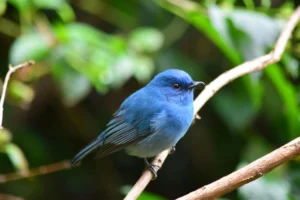
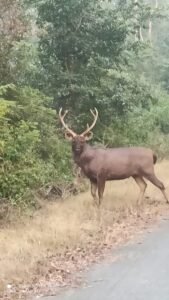
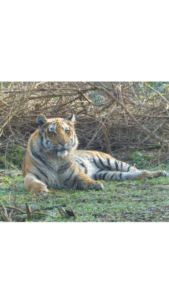
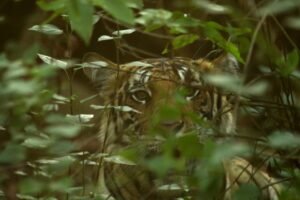
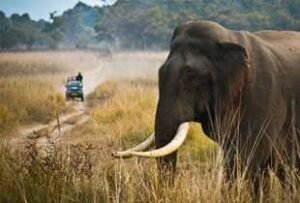
Corbett holds one of India’s most significant tiger populations, but it is far more than a tiger park. On almost every drive you will see spotted deer, sambar, langur and a long list of birds. Elephants are common, especially in the riverbed zones; crocodiles and otters live along the Ramganga and Kosi rivers; and over 500 bird species have been recorded across the landscape.
For honest sighting odds by species, see our wildlife of Jim Corbett guide. Birders should read our birdwatching guide, and photographers our photography guide.
Where to stay
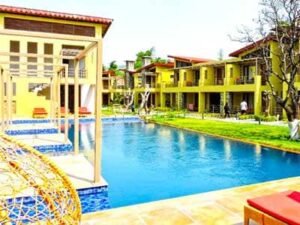
Most visitors stay in Ramnagar or the resort belt along the Kosi River near the park. Dhikala is the one zone where you can stay inside the park, at forest rest houses — a genuinely special experience that removes the pre-dawn drive to the gate. See our Corbett hotels and resorts page for options, and our guide to places to visit near Jim Corbett for extending the trip to Nainital or Ranikhet.
What to pack
Layers for winter mornings (open jeeps are cold before sunrise), light cotton and sun protection for summer, and muted natural colours year-round — olive, khaki, brown, grey. Binoculars are the most useful item after warm clothing. The full season-by-season checklist is in our packing guide.
Common mistakes to avoid
- Booking too late. Permits sell out; book the day the window opens.
- Only booking one safari. Two or three drives across zones and slots transform the experience.
- Taking the afternoon slot. Wildlife is most active in the morning.
- Forgetting original ID. You will be turned away at the gate without it.
- Expecting a guaranteed tiger. No operator can promise one honestly.
Each of these is explained in our guide to safari mistakes first-time visitors make.
Park rules to know
- Stay in the vehicle at all times inside the park.
- No drones — they are prohibited in the national park.
- No loud music, no littering, no single-use plastic.
- Do not pressure your driver to chase or approach animals.
- Carry original ID; permits are non-transferable and checked at the gate.
See also our guide to Jim Corbett safari timings, entry fee and ticket price.
Still deciding where to go? See our guide to the best Jim Corbett safari zone for you.
Frequently asked questions
How much does a Jim Corbett safari cost?
A jeep safari costs from INR 7,500 per jeep (INR 6,000 in eco-tourism zones), a canter safari is INR 2,500 per person for the Dhikala zone, and an elephant safari is INR 4,000. Prices include the Forest Department permit, vehicle and guide.
Which is the best zone in Jim Corbett for tiger sightings?
Bijrani is often cited as having the highest tiger-sighting probability, and Jhirna is a known hotspot that stays open all year. Dhela’s open grassland also offers strong odds.
How many safari zones are there in Jim Corbett?
There are 12 zones: Bijrani, Dhikala, Jhirna, Dhela, Garjiya, Durga Devi, Sitabani, Phato, Pakhro, Mohaan, Kaladhungi and Hathi Dager. Each has its own gate, permit quota and character.
How far in advance should I book a Jim Corbett safari?
Forest Department permits open 45 days before the safari date for Indian nationals and 90 days for foreign nationals. For winter weekends, holidays and Dhikala, book as soon as the window opens.
Is Jim Corbett open during the monsoon?
The core zones close from roughly July to mid-October because forest tracks become impassable. Jhirna and Sitabani stay open year-round, so monsoon visits are still possible.
Do I need a permit for a Jim Corbett safari?
Yes, every core-zone safari requires a Forest Department permit with a fixed daily quota. The Sitabani zone, which lies outside the core park, does not require a permit.
Book your Jim Corbett safari with Bagh Travels
With 25+ years based in Ramnagar, we handle the whole process — recommending the right zone for your dates, arranging Forest Department permits, and providing the jeep and a licensed guide. We will tell you honestly when to shift your dates for better odds.
Check prices and book online, browse our Corbett tour packages, or contact our team for a free, tailored recommendation.