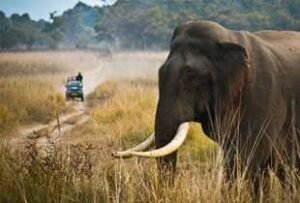
The honest answer to “when should I visit Jim Corbett?” depends on what you want from the trip. Come in March to June and your chances of seeing a tiger are the highest of the year — but you will be riding through real heat. Come in November to February and you get crisp mornings, clear Himalayan views and comfortable drives, with sightings that are steadier rather than spectacular.
We have been running safaris out of Ramnagar for over 25 years, and this is the question guests ask us more than any other. Below is what actually happens month by month — the weather, the wildlife behaviour, and which zones stay open when.
On this page
Quick answer: the best time to visit Jim Corbett
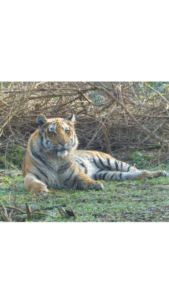
For tiger sightings: mid-March to mid-June. Water sources shrink, forest cover thins, and animals concentrate around the remaining waterholes and riverbeds. This is peak sighting season.
For comfortable weather and scenery: November to February. Daytime temperatures sit in a pleasant range, mornings are misty, and on clear days you can see the Himalayan foothills from the higher zones.
For fewer crowds and lower prices: late June and September to mid-October, when the core zones begin reopening after the monsoon.
The one thing to know before booking: the core safari zones of Jim Corbett close during the monsoon — roughly July through mid-October — because the forest tracks become unusable. A few buffer zones stay open all year.
Season comparison at a glance
| Season | Months | Tiger sightings | Weather | Crowds |
|---|---|---|---|---|
| Winter | Nov – Feb | Good | Cool, misty mornings, clear skies | High (peak holidays) |
| Spring | Mar – Apr | Very good | Warm days, pleasant mornings | Moderate |
| Summer | May – Jun | Best | Hot, especially afternoons | Moderate |
| Monsoon | Jul – mid Oct | Limited — core zones closed | Heavy rain, lush forest | Low |
Month by month
November – December
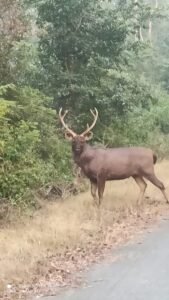
The season proper begins. Mornings are cold and often misty, which makes for atmospheric drives but can reduce visibility in the first hour. Deer and elephant activity is high, and the grass is still tall enough to make tiger sightings a matter of patience. December brings holiday crowds, so permits for the popular zones sell out well in advance.
January – February
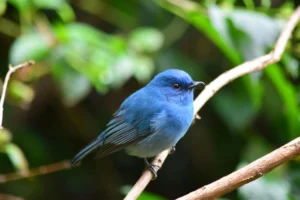
The coldest stretch. Early morning safaris genuinely require warm layers — guests routinely underestimate this. In return you get the clearest air of the year and, from the higher zones, views out to the Himalayan foothills. Birdlife is excellent as migratory species are present. Sightings are steady rather than dramatic.
March – April
In our experience this is the most balanced window of the year. The cold has gone but the serious heat has not arrived. Undergrowth begins to thin, water sources start shrinking, and animals move more predictably toward the rivers. If you want a good chance of a tiger without enduring peak summer temperatures, book here.
May – June
The hottest months, and the best for sightings. By late May the forest is dry, the cover is low, and animals congregate at the few reliable waterholes. Afternoon drives are genuinely hot, so most guests prefer the morning slot. Carry water, a hat and sunscreen. Core zones typically run until the end of June before closing for the monsoon.
July – mid October (monsoon)
The core zones close because forest tracks become impassable and the park prioritises breeding season. The landscape is at its most beautiful — everything is green and the rivers run full — but jeep access to the main zones is not available.
This is where the buffer zones matter. Jhirna stays open all year, and Sitabani operates year-round and does not require a Forest Department permit at all. If your dates fall in the monsoon, these are your options — and they are genuinely rewarding for birdwatching and nature walks.
Safari timings by season
Timings shift with the season because the park works around daylight. These are the current slots:
| Safari | Season | Morning | Evening |
|---|---|---|---|
| Jeep safari | Summer | 6:00 AM – 10:00 AM | 2:00 PM – 6:00 PM |
| Jeep safari | Winter | 6:30 AM – 10:30 AM | 1:30 PM – 5:30 PM |
| Canter safari (Dhikala) | All year | 6:00 AM – 11:50 AM | 12:00 PM – 6:00 PM |
Morning slots are consistently better for wildlife activity. If you can only do one safari, make it a morning one.
Which zone suits your season
Zone choice matters as much as timing. Dhikala is the largest zone and the only one where you can stay overnight inside the park — it is in highest demand during winter. Bijrani runs from mid-October to the end of June and is often cited as having the strongest tiger-sighting odds. Dhela offers open grassland that makes spotting easier.
For the monsoon months, Jhirna and Sitabani are the reliable choices. You can compare all twelve on our Jim Corbett safari zones page.
Where you will be based: Ramnagar
Almost every Jim Corbett safari starts from Ramnagar, a small town in the Nainital district of Uttarakhand. It is the administrative gateway to the park, where the Forest Department permit office sits and where most resorts and safari operators are based. Our own office is on Gas Godam Road, Board Office Road, Ramnagar.
Ramnagar matters for timing because the distance from town to your zone gate decides how early you leave. Bijrani is roughly 2 km away, so a 6:00 AM slot means leaving around 5:30. Kaladhungi is about 26 km and Mohaan about 30 km, so those need an earlier start. Pakhro is entered via Kotdwar rather than Ramnagar entirely, which changes the whole plan — worth knowing before you book a hotel.
Exact gate distances are listed on each zone guide. If you tell us your dates and where you are staying in Ramnagar, we will work backwards to a realistic pickup time.
When to actually book
This trips people up more than the weather does. Forest Department permits open 45 days before the safari date for Indian nationals and 90 days for foreign nationals. Quotas per zone are fixed and small.
In practice: for a winter weekend or any date over a public holiday, treat the 45-day mark as a deadline rather than a guideline. Dhikala fills first. If your dates are fixed, book the moment the window opens.
You will need original photo ID — Aadhaar, passport, voter ID or driving licence — for every passenger, because ID details are printed on the permit and checked at the gate.
Deciding when to go? See our guide to Jim Corbett in October and November.
Frequently asked questions
What is the best month to visit Jim Corbett for tiger sightings?
May and June offer the highest tiger-sighting probability. The forest is dry, undergrowth is thin, and animals gather at the few remaining water sources. March and April are close behind with far more comfortable weather.
Is Jim Corbett open during the monsoon?
The core zones close from roughly July to mid-October because forest tracks become impassable. Jhirna and Sitabani stay open year-round, so monsoon visits are still possible.
How far in advance should I book a Jim Corbett safari?
Forest Department permits open 45 days before the safari date for Indian nationals and 90 days for foreign nationals. For winter weekends, holidays and Dhikala, book as soon as that window opens.
What should I wear on a winter safari in Jim Corbett?
Layers. Early mornings in January and February are genuinely cold in an open jeep, but it warms quickly once the sun is up. Wear muted natural colours and avoid bright clothing.
Is a morning or evening safari better?
Morning. Wildlife is most active in the first hours after dawn, and in summer the afternoon heat reduces animal movement considerably.
More Jim Corbett Safari Guides
- How to Reach Jim Corbett from Delhi
- Jim Corbett Safari with Kids
- What to Pack for a Jim Corbett Safari
- Jeep vs Canter Safari: Which to Book
Browse all our Jim Corbett travel guides and safari tips.
Plan your trip
Tell us your dates and we will tell you honestly which zone gives you the best chance — including when the answer is “shift your dates by a week.” Our Ramnagar team handles permits, jeeps and licensed guides for all 12 zones.
Check safari prices and book online, browse our Corbett tour packages, or message our team for a free recommendation.