Most Jim Corbett articles promise tigers. We would rather tell you what you will genuinely see, because a drive judged only against a tiger is a drive most people would call a failure — and that is the wrong way to experience this forest.
Here is what actually lives here and how often our guests encounter each.
On this page
Quick answer
Almost every drive: spotted deer, sambar, langur, wild boar, peacocks and a long list of birds.
Frequently: elephants, especially in the riverbed zones; crocodiles and otters along the water.
Sometimes, with luck: tigers. Best odds in May and June on morning drives.
Rarely: leopards, which are present in good numbers but shy and mostly nocturnal.
Tigers and leopards
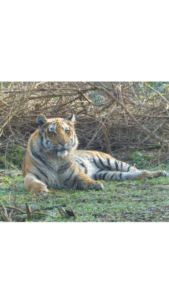
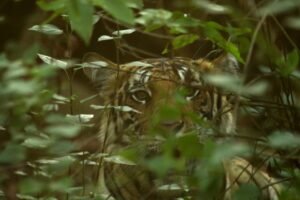
The Bengal tiger is why most visitors come, and Corbett holds one of India’s most significant populations. But this is a large forest with dense cover, and a tiger that does not wish to be seen will not be seen.
Sightings improve when water is scarce and undergrowth is thin — which is why late spring and early summer are the strongest months. Bijrani is often cited as having the highest sighting probability, and Jhirna is a known hotspot that stays open all year.
Leopards are the quieter story. They share the landscape with tigers but avoid them, keeping to steeper ground and hunting largely at night. Most guests who see one see it briefly, crossing a track.
Elephants
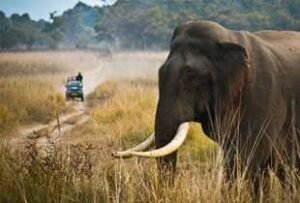
Asiatic elephants are among the most reliable large-mammal sightings in Corbett, and in some zones they are close to guaranteed. Herds move along riverbeds and grassland, and in the dry months they concentrate near water.
Hathi Dager is named for them — hathi means elephant, and the zone follows a traditional migration corridor. If elephants matter more to you than tigers, ask us about that zone specifically.
Deer and prey species
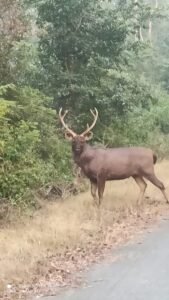
You will see deer. Spotted deer (chital) move in large herds across open ground, and sambar — India’s largest deer — favour denser cover near water. Barking deer and hog deer are also present.
Watch the langur monkeys. They sit high and call loudly when a predator moves below, and experienced guides use those alarm calls to locate tigers. A sudden change in the forest’s noise is often the first sign something is happening.
Wild boar are common, and peacocks are everywhere.
River wildlife
The Ramganga and Kosi rivers support their own community. Mugger crocodiles and the fish-eating gharial bask on sandbanks, particularly around the Ramganga reservoir in Dhikala. Smooth-coated otters fish in family groups and are a genuine highlight when you catch them.
The riverbed zones such as Mohaan along the Kosi are good for this kind of sighting.
Birds
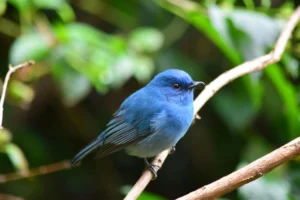
Over 500 bird species have been recorded across the wider Corbett landscape. Serious birders come here for that alone.
Durga Devi is the birding zone, with hill terrain, river gorges and species including the Grey-headed Fishing Eagle. Sitabani is excellent too, and because it needs no Forest Department permit and stays open all year, it suits unhurried birdwatching on foot.
Realistic odds
| Species | How often | Best chance |
|---|---|---|
| Spotted deer, sambar, langur | Almost every drive | All zones, all seasons |
| Elephant | Frequent | Riverbed zones, dry months |
| Crocodile / otter | Frequent near water | Dhikala, Ramganga reservoir |
| Tiger | Occasional | May–June, morning drives |
| Leopard | Rare | Any zone, largely luck |
Our guide to the best time to visit Jim Corbett breaks the seasons down month by month.
Frequently asked questions
Will I definitely see a tiger in Jim Corbett?
No. Tigers are wild and sightings are never guaranteed, whatever the zone or season. Your odds improve markedly in the dry months of May and June, and on morning drives, but treat a tiger as a bonus rather than the plan.
What animals are most commonly seen in Jim Corbett?
Spotted deer, sambar, langur and wild boar are seen on almost every drive. Elephants are common, particularly in the riverbed zones. Crocodiles and otters are regular along the Ramganga.
How many bird species are in Jim Corbett?
Over 500 species have been recorded across the wider Corbett landscape, which is why the park is a serious birdwatching destination as well as a tiger reserve.
Are leopards seen in Jim Corbett?
Yes, leopards are present, but they are shy and largely nocturnal, so sightings are much rarer than tigers despite similar numbers.
More Jim Corbett Safari Guides
- Birdwatching in Jim Corbett
- Wildlife Photography in Jim Corbett
- Safari Mistakes First-Timers Make
- Places to Visit Near Jim Corbett
Browse all our Jim Corbett travel guides and safari tips.
Plan your safari with us
We have run safaris out of Ramnagar, Nainital district, Uttarakhand for over 25 years. Tell us your dates and we will recommend the right zone, arrange the Forest Department permit and handle the jeep and guide.
Check prices and book online, browse Corbett tour packages, or message our team for a free recommendation.